
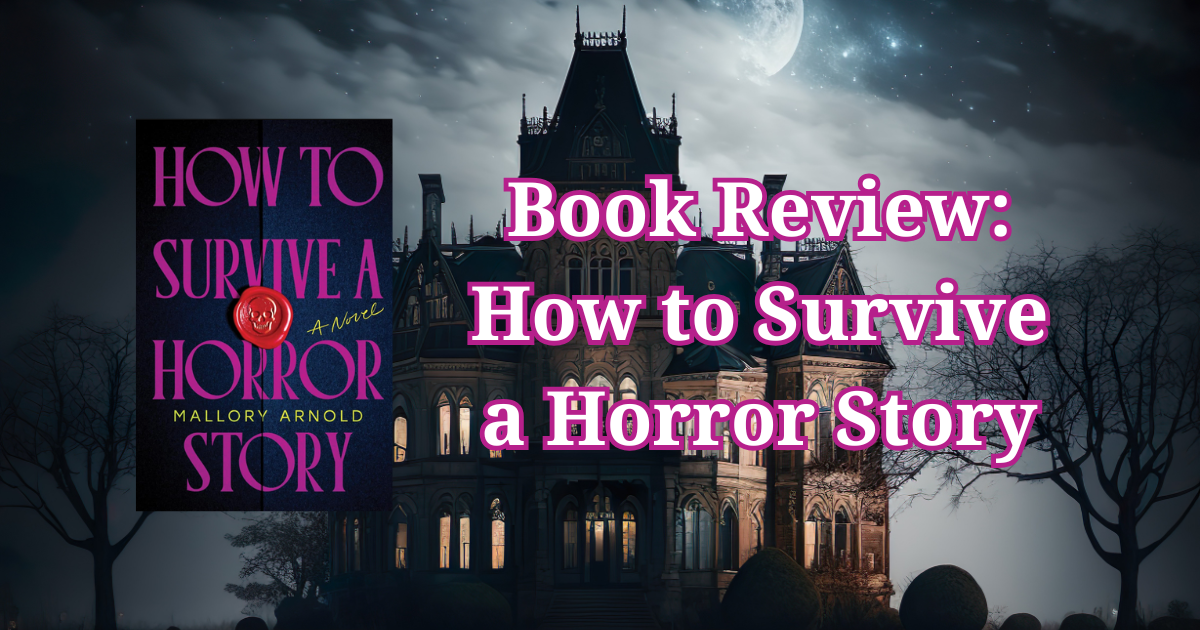
This review will boil down to one thing: good idea, okay execution. The concept sucks you in very easily: 7 horror writers are invited to the will reading of acclaimed horror author Mortimer Queen. It is revealed very quickly that none of them are there to accept wild riches from the estate, oh no. Instead they are treated to an escape room from hell: a semi-sentient home, and a riddle in each room where if it goes unsolved, someone will die.
Sounds awesome, right?
Unfortunately the novel fails to deliver on this concept. It gives us what are almost stock characters who don’t get to grow or change as the story moves on, and leaves us with a muddy message overall.
Warning: this review contains spoilers!
Breaking the Rule of “Show Don’t Tell”.
A good chunk of this story is spent telling the reader instead of showing, and I hate to say it, but at times it feels like lazy writing. This may just be personal preference, but it feels more difficult to connect with a character when I’m told everything about them rather than discovering it on my own through the details, behaviors, and mannerisms on display.
We are told at every turn, this one is an alcoholic, this one has anger issues, she likes to gossip, she doesn’t mind her own business. The characters become a laundry list of traits rather than a actual character readers care about and want to root for.
I highlighted a quote that says “Tell me about your childhood” “what, now?” “Now’s a good a time as any”, and I actually heaved a deep sigh upon reading it. I get it, sometimes it’s hard to find a way to introduce your character’s backstory, but straight up asking them about it in the middle of a life or death situation is not quite where I expected to see it as a reader.
Instead of asking outright, why not a quiet confession or revelation from Buck that leads to Scott reciprocating? Life and death situations can breed feelings of regret, anger, nostalgia—all great storytelling gateways to revealing character details and backstories. Rather than these two near-strangers saying “tell me about your childhood” and “okay, sure!”
Lack of Clear Message or Point
We are told from the beginning Mortimer Queen is the monster, Mortimer is and always has been cruel. What many of these characters have “done” to Mortimer should not have garnered a death sentence (I’ll let you be the judge should you decide to read the story, but a stolen manuscript doesn’t warrant a grisly death sentence in my book). Readers are also told by those characters that Mortimer is “rewriting” what each other writer did to him, to make them all seem worse than they are, making his revenge unwarranted.
But then it’s revealed in each specific character’s flashbacks that they DID do what Mortimer says they did. So was the whole “rewriting” thing meant to make them unreliable narrators, and gain sympathy from readers until the flashbacks reveal the truth? If so, the “big reveal” that each character did in fact do SOMETHING that would make Mortimer want revenge was not surprising or necessarily satisfying, unfortunately. So yes, Mortimer was a monster in life, but the reader is told the other characters are supposed to be monsters too? So everyone in the manor is “bad”, but Melanie should somehow agree with the man who put them through hell in the first place? Or is the point that they’re all bad, and people will do “terrible things” in the name of success as a writer?
Also, if the entire narrative is about bad people deserving bad things, and the extent people will go to in the name of success, why the hell does Melanie’s downright abusive mother all of a sudden want to play nice because she’s been gone for like a week– leaving readers with no other explanation as to why they’ve patched things up? If bad people deserve comeuppance is the point of the story, the sudden patching up feels both rushed and unearned.
Lack of Character Development
There’s a distinct lack of character development in the main cast of characters. While that may be intentional on the part of the supporting cast, Melanie is our main character, and deserved a more coherent transformation. Yes, Melanie speaks up more throughout the story to help solve puzzles (instead of trying to blend into the furniture), but she doesn’t overcome her fear of conflict or confrontation until we make the leap to her killing one of the others herself. It reads as too large a character leap. She goes from wallflower, to actively contributing to solving riddles (good character development) to actively killing two people (bit of a leap).
The other characters remain pretty much as they are throughout the entire story. They push their way forward into each puzzle room without any growth until it’s their turn to meet their demise. The lack of character growth also contributes to the way I really didn’t care when each one died, because I didn’t know enough about them to make me care in the first place.
The only character I actually felt truly bad for was Buck, because Melanie’s justification in leaving him to die was the thinnest, worst justification I’ve seen. Maybe that’s on purpose to make readers realize Melanie is “just like the others” now, but once again, it doesn’t feel warranted because her character growth to get here there does not feel natural. It’s less of a “watching in horror as Anakin Skywalker murders younglings”, and more of a “letting out a deeply exasperated ‘are you kidding me?’ as Melanie leaves Buck to die alone”.
TL;DR
Regretfully, in my heart this story has 2.5 stars. The concept was enough to draw me in, but halfway through the story I started to write notes like “don’t love that”. My notes only get more exasperated as the story goes on, including one that says, “oooooooooh my god. is that the point of the story, is that our message finally?” on the quote: “Even if she’s being nice to you now, that doesn’t change what she’s done. You know that, right? She’s still a monster.”.
“How to Survive a Horror Story” also fails to live up to it’s name. While the characters give us a few rules to surviving early on, those rules are thrown out the window quite quickly. The rules might have made a difference if the characters grew or changed as the story progressed, but in the end, the only way to survive this horror story was to play outside the rules to begin with, the same way Melanie did.
Suggested Reading/Watching
Looking for more horror stories but with a killer execution? NOS4A2 has you covered. Prefer to watch your horror and throw in some comedy? Definitely try out Widow’s Bay on Apple TV.
Become a Fictionista!
Feel free to follow me on Instagram or Pinterest as well for more Fiction content!